
Imagine, for a moment, that every child walks around with a backpack. It isn't the neon-colored, character-branded nylon sack they haul to school, filled with textbooks and half-eaten granola bars. No, this is an invisible rucksack, woven from nervous system responses, unspoken fears, and sensory inputs that adults often filter out as background noise. We tend to look at a child's behavior — the meltdowns in the cereal aisle, the sudden silence at the dinner table, the explosive refusal to put on shoes — and see defiance. We label it "bad behavior." But if we adjust our lenses, we might see something else entirely. We might see a kid struggling under the weight of a pack that has become too heavy to carry alone.
This metaphor isn't just poetic fluff; it is a clinical reality disguised as storytelling. As a therapist who has spent two decades watching humans navigate the messy architecture of their own minds, I have learned that behavior is communication. When a child acts out, they are not giving you a hard time; they are having a hard time. Their backpack is overflowing. Understanding what is inside that invisible load changes everything about how we approach parenting. It shifts us from being wardens of compliance to becoming architects of support. Let's unpack this rucksack, item by strange and heavy item, to see what our kids are really carrying.
The Rocks of Unprocessed Sensory Data
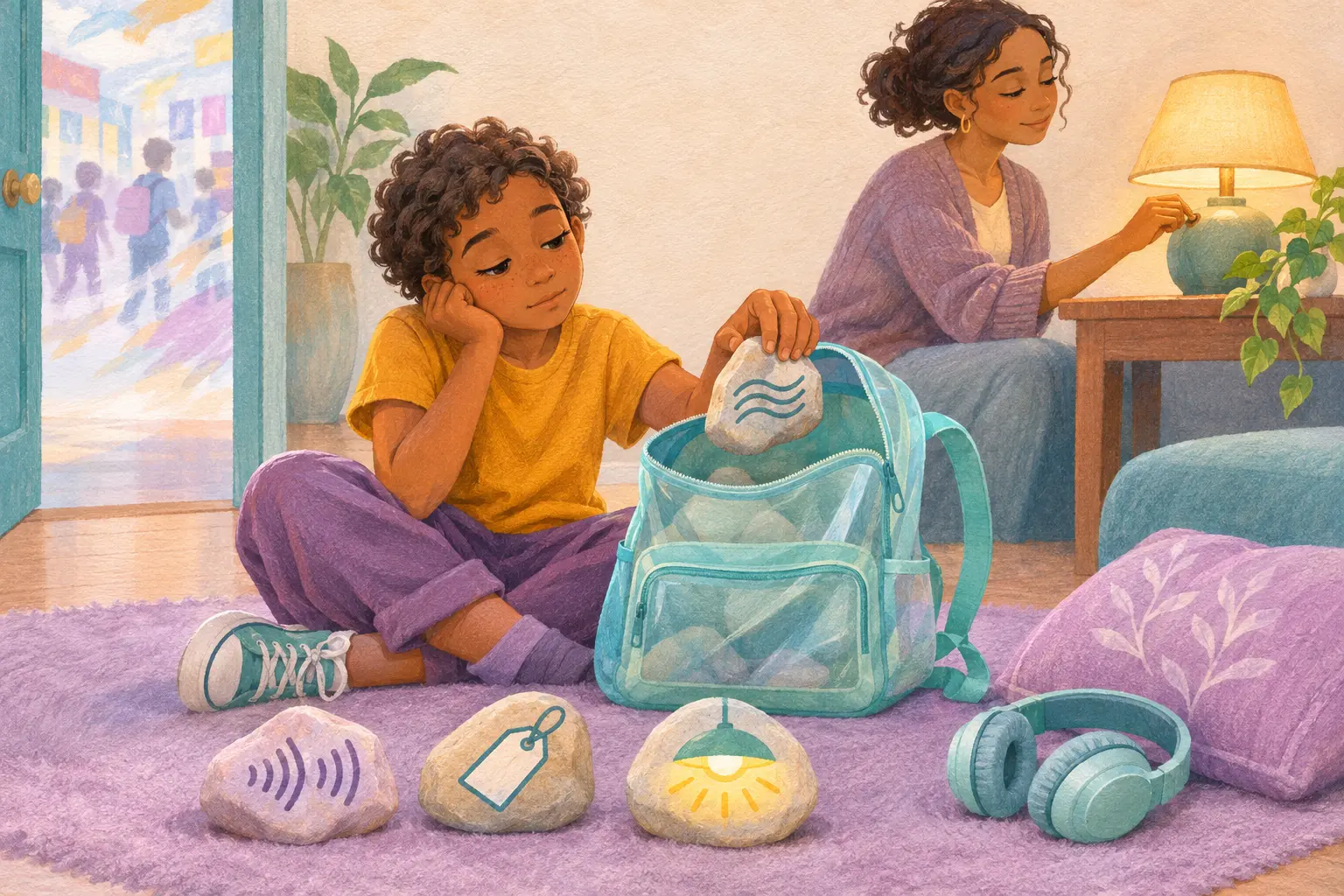
The first layer of this invisible backpack is often composed of rocks. These aren't smooth, skipping stones; they are jagged, irregular chunks of sensory data that the adult brain has learned to ignore but the developing brain cannot yet filter. For many children, the hum of the refrigerator sounds like a jet engine. The tag on their shirt feels like sandpaper rubbing against raw skin. The fluorescent lights in the classroom flicker with a strobe-like intensity that induces low-grade panic. Adults walk through these environments with a built-in noise-canceling headset, but kids are walking through them with their nerves exposed.
When a child collapses after school, it is rarely because they are lazy. It is because they have spent six hours holding up these rocks. They have been manually regulating their attention against a barrage of sensory assaults that we no longer notice. This constant effort depletes their cognitive battery. By the time they get home, the backpack is so heavy with sensory debris that they cannot possibly manage the additional weight of homework or polite conversation. Recognizing these rocks allows us to stop asking, "Why are you so tired?" and start asking, "How can we help you set this down?" We create quiet zones, we remove tags, we dim lights. We acknowledge the weight rather than judging the collapse.
The Tangled Vines of Social Ambiguity
Beneath the rocks lie tangled vines. These represent the complex, often contradictory social rules that children must navigate without a clear map. Adults operate with years of social coding experience; we know when a smile is genuine and when it is a mask. We understand sarcasm, hierarchy, and unspoken boundaries. Children, however, are still decoding the source code of human interaction. Every playground interaction is a high-stakes puzzle where the pieces keep changing shape. Did my friend laugh with me or at me? Why did the teacher's tone change when I raised my hand?
These vines twist and knot together, creating a dense thicket of anxiety. A child who seems withdrawn or aggressive on the playground may actually be paralyzed by the fear of misreading a social cue. They carry the weight of potential rejection, the confusion of shifting alliances, and the pressure to perform socially while still learning how to tie their shoes. This is where emotional regulation becomes less about "calming down" and more about untangling. We help them by narrating the social world, by role-playing scenarios, and by validating that social ambiguity is genuinely confusing. We don't dismiss their fears as silly; we acknowledge that navigating the vineyard is hard work.

The Water Bottles of Unnamed Emotions
Every backpack needs hydration, but in this metaphorical rucksack, the water bottles are leaking. Children feel emotions with a visceral intensity that adults often forget. Joy is ecstatic; sadness is catastrophic; anger is volcanic. Because their prefrontal cortex — the brain's CEO — is still under construction, they lack the vocabulary and the neural pathways to process these floods. So, they bottle them up. They swallow the disappointment of a canceled playdate. They choke down the frustration of a math problem they can't solve. They absorb the tension between their parents.
Eventually, the bottles leak. This leakage looks like tantrums, tears, or sudden irritability over seemingly trivial matters. An adult might say, "You're crying over spilled milk," missing the point entirely. The child isn't crying over the milk; they are crying because the bottle of grief from last week, the bottle of shame from yesterday, and the bottle of frustration from this morning have all sprung leaks simultaneously. We must teach them to name the liquid. Is it sadness? Fear? Overwhelm? Naming it reduces its power. We provide the labels so they can pour the excess out safely, rather than letting it soak into their clothes and weigh them down further.

The Bricks of Adult Expectations
Perhaps the heaviest items in the backpack are the bricks. These are solid, dense, and often placed there by well-meaning adults. We live in a culture that values productivity, even in childhood. We schedule playdates like business meetings. We expect focus in environments designed for distraction. We praise achievement over effort, compliance over curiosity. Each expectation — "Sit still," "Be quiet," "Get an A," "Share nicely" — adds a brick to the load. Individually, a brick is manageable. Collectively, they form a wall that crushes the spirit.
Children internalize these expectations as conditions for love and safety. They believe that if they drop the bricks, they will be rejected. So, they carry them until their backs buckle. This is where we must engage in some strategic rebellion against stale systems. We need to ask ourselves: Which of these bricks are actually necessary? Which ones are just societal inertia? We can remove the brick of "perfect behavior" and replace it with the feather of "authentic connection." We can swap the brick of "constant productivity" for the balloon of "unstructured play." Lightening the load requires us to examine our own values and ensure we aren't handing our children weights they were never meant to lift.

The Compass of Curiosity
So, how do we help them carry this load? We don't take the backpack away entirely; life involves weight. Instead, we give them a better compass. Curiosity is that compass. When we approach a child's behavior with curiosity rather than judgment, we change the dynamic. Instead of saying, "Stop yelling," we ask, "What feels so big right now?" Instead of saying, "Why won't you focus?" we ask, "What is distracting you?" This shift transforms the interaction from a power struggle into a collaborative investigation.
Using metaphors like the backpack helps children externalize their struggles. It separates their identity from their behavior. They are not "bad kids"; they are kids with heavy backpacks. This distinction is crucial for building self-esteem. It allows them to look at their feelings objectively, like items in a bag, rather than feeling consumed by them. We encourage them to check their inventory. "Is your backpack heavy today? What's in it?" This practice builds meta-cognition, the ability to think about thinking. It empowers them to become the managers of their own internal landscape, rather than victims of it.

Building the Architecture of Resilience
Ultimately, our goal is not to eliminate the backpack but to strengthen the child's back. Resilience is not a trait you are born with; it is architecture you build. It is constructed through repeated experiences of being seen, heard, and supported. When we validate their sensory struggles, untangle their social vines, help them name their leaking emotions, and remove unnecessary bricks, we are reinforcing their structural integrity. We are teaching them that they can handle weight because they do not have to carry it alone.
This work requires patience, creativity, and a willingness to look beyond the surface. It demands that we reject beige, one-size-fits-all solutions in favor of tailored, emotionally intelligent strategies. It asks us to be playful, to use humor as regulation, and to remain curious even when exhausted. By viewing childhood through the lens of the invisible rucksack, we gain empathy. We see the effort behind the explosion. We see the courage in the quiet. And in seeing them clearly, we give them the greatest gift of all: the knowledge that they are understood, and that their burden is shared.